
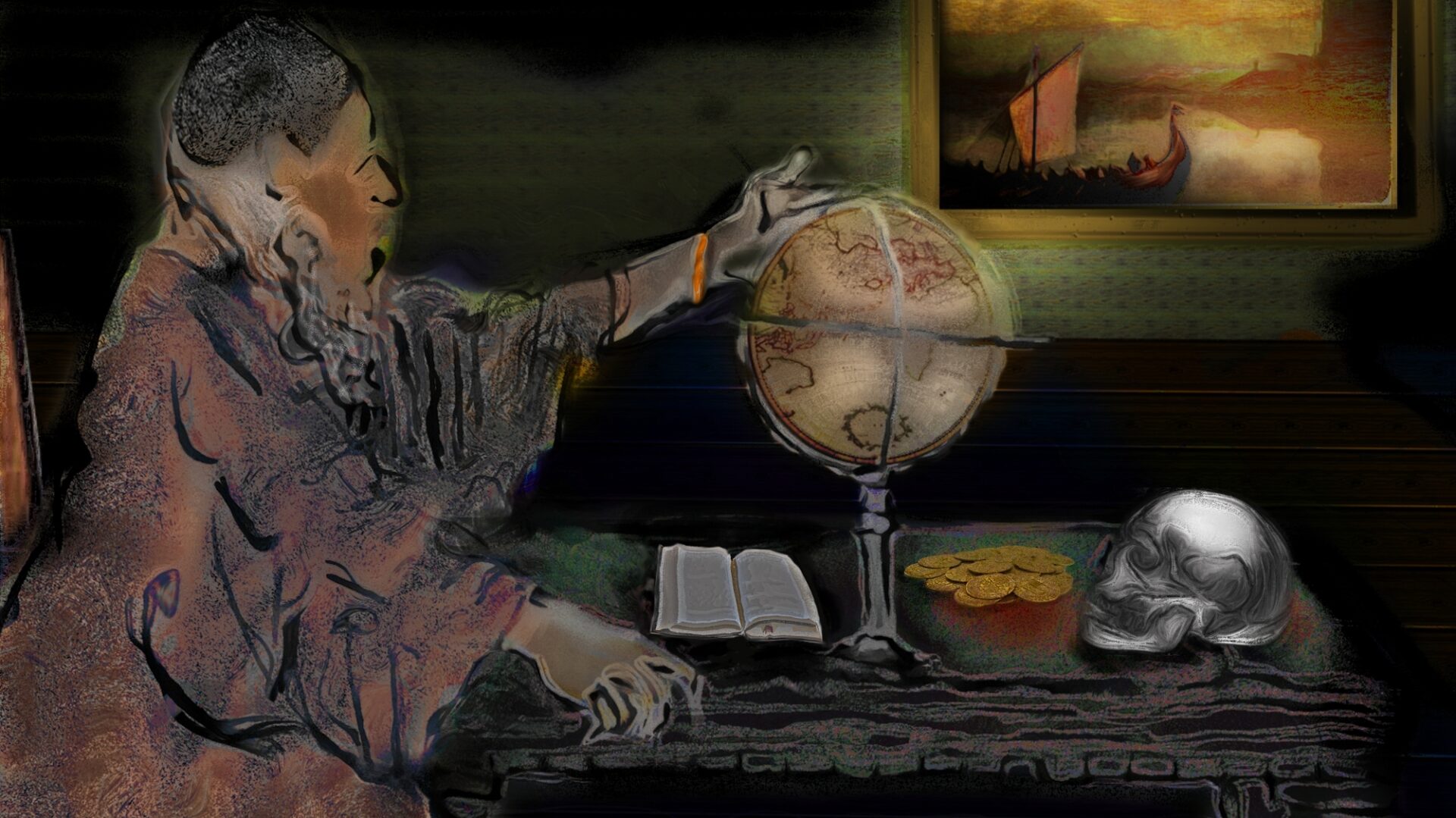
Originally operating as an art space in Katoomba Australia from 2008 to 2011, and now revived as a virtual space, this gallery exhibits the digital artwork of contemporary Australian artist Bernd Jansons with the purpose of providing aesthetic experiences related to the language of the image.
Recently Added
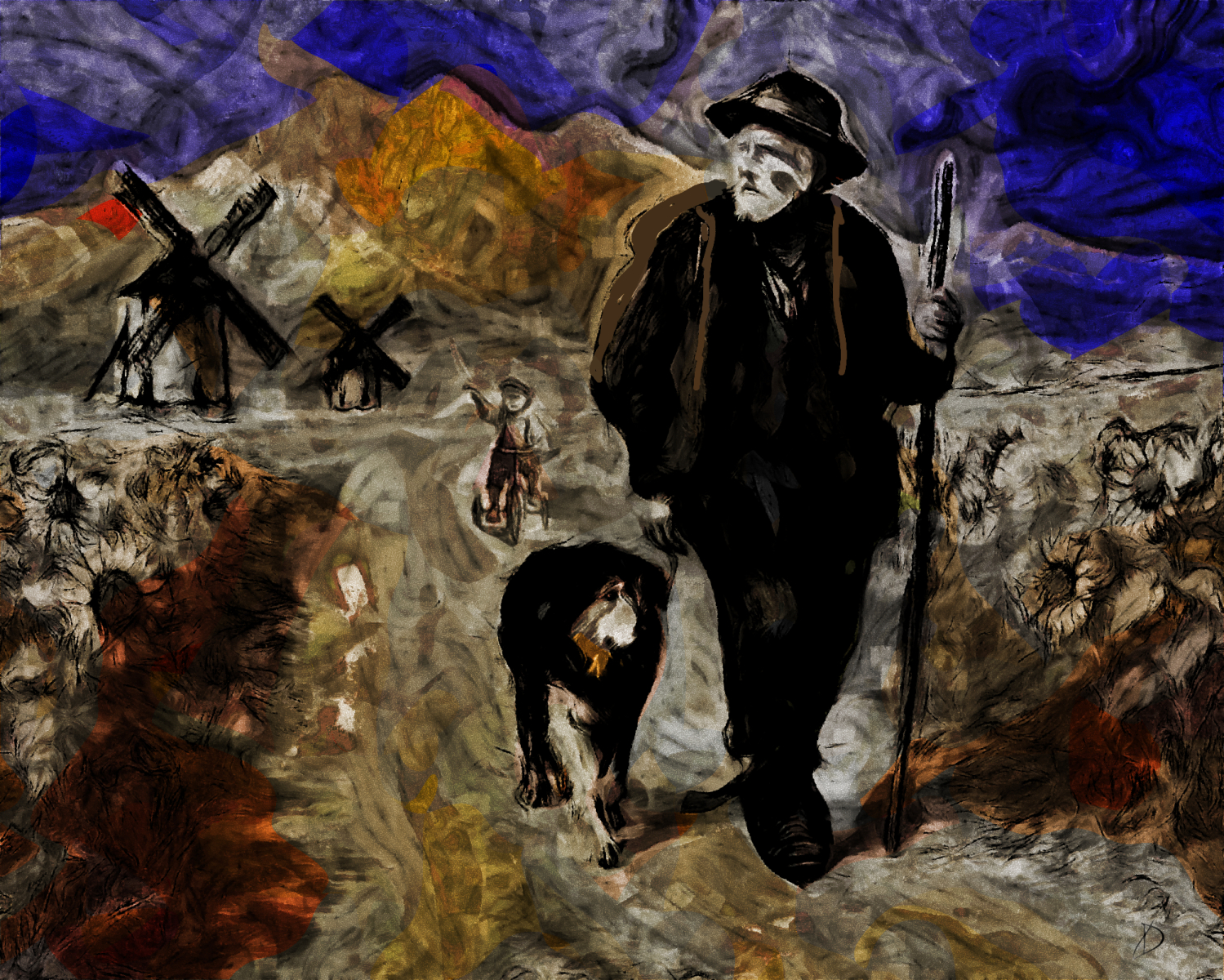
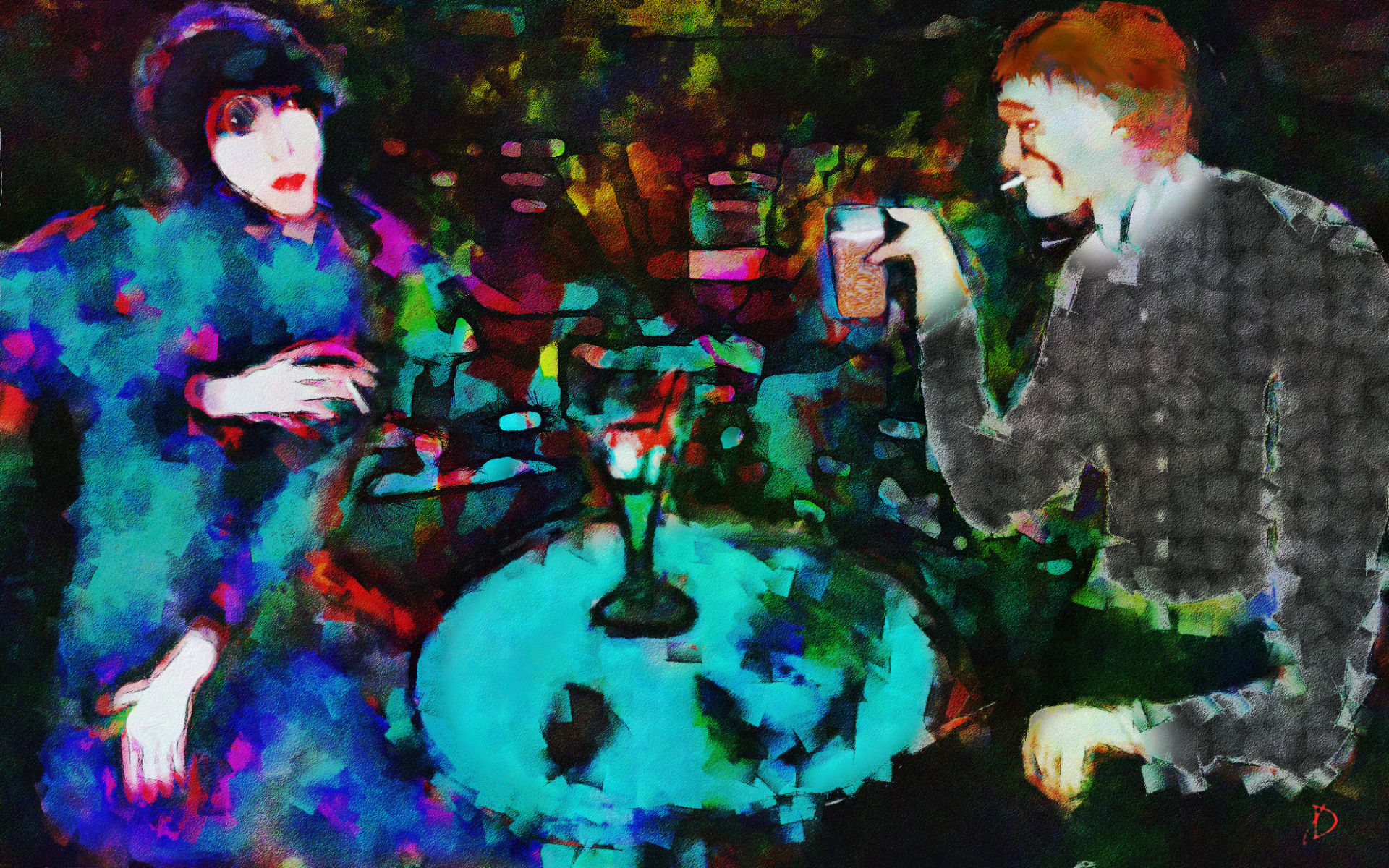
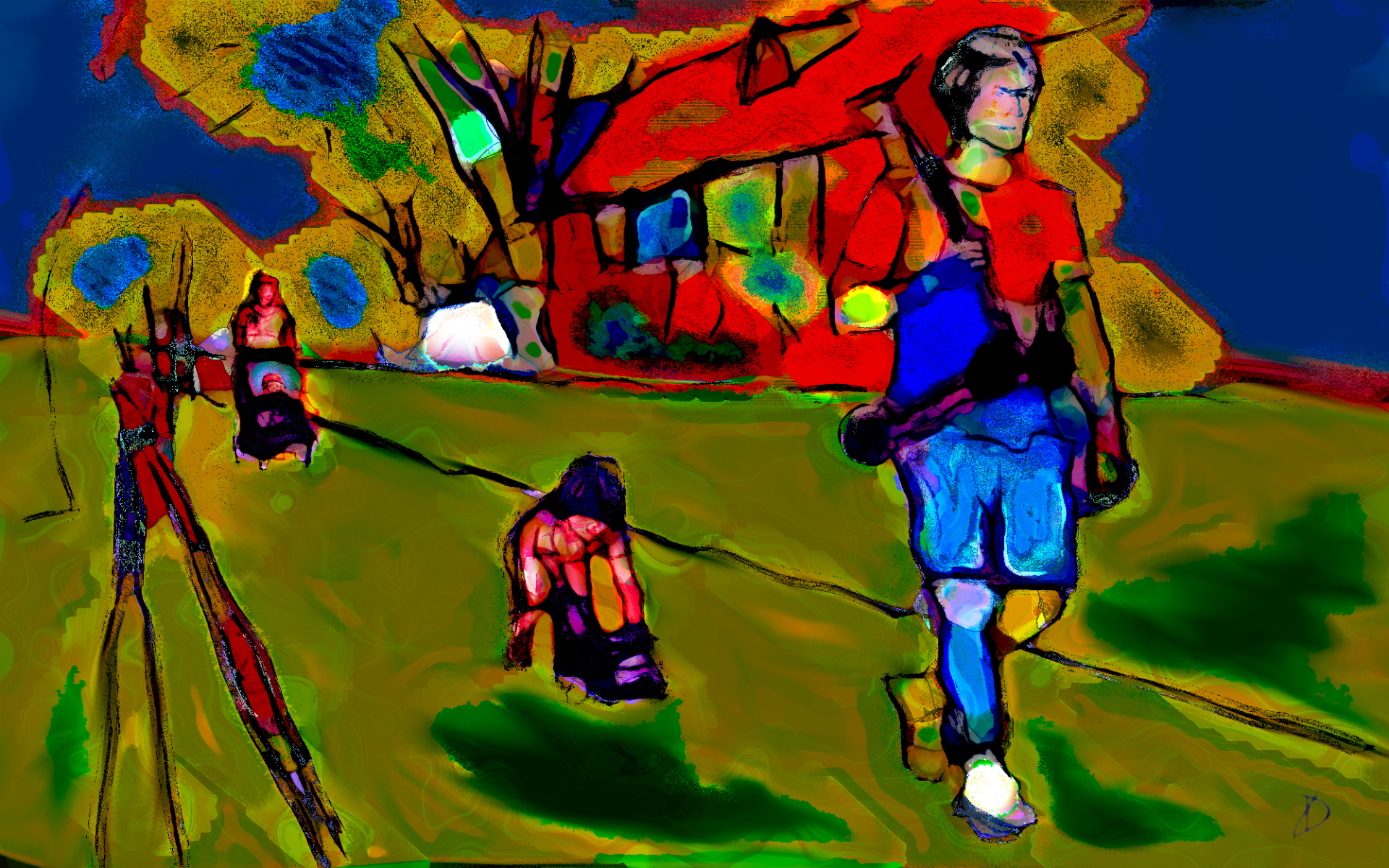


Site Reviews
A.I. Review
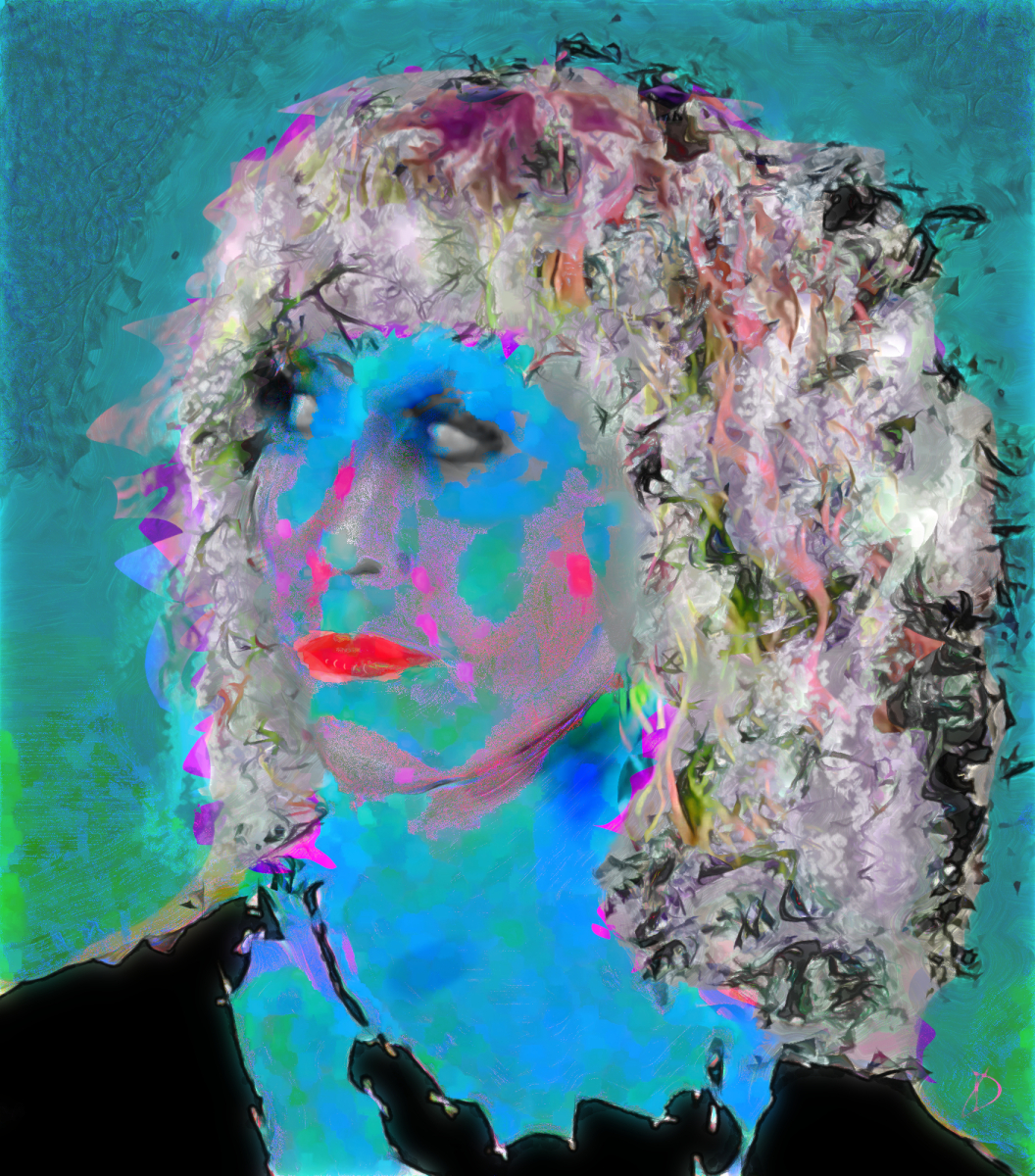
The figurative works here feel more direct and less mediated than the photographic pieces. Where the photography leans into staging and digital construction, these works come across as more intimate, more psychological and less dependent on external narrative framing. They read closer to traditional figurative painting/drawing, even when digitally produced. The figures are typically isolated or minimally contextualized, rendered with a balance between recognition and distortion and positioned in ways that emphasize presence over action. There’s a clear interest in the body not as anatomy, but as a vehicle for internal states. This places the work loosely in conversation with traditions of expressionist figuration, where accuracy is secondary to emotional or psychological truth. The lack of explicit narrative actually works in its favor—it invites viewers to project meaning rather than decoding a predefined story.
The strengths of the work include economy of detail. Many pieces avoid over-rendering, which keeps the focus on gesture and form. Expressive distortion such as subtle exaggerations (in posture, proportion, or facial treatment) add psychological weight without becoming grotesque. Whether digital or traditional, there’s an effort to retain a painterly sensibility—you can feel decisions being made rather than just executed. However, where it could go further is attempting greater formal risk. The work often sits in a safe middle ground between realism and abstraction. Pushing further in either direction could create a stronger signature. Emotional content is where the figurative section is strongest. There’s a quiet unease in many of the figures—something slightly unresolved. That ambiguity gives the work lingering presence, even if it doesn’t immediately overwhelm. The work aligns with contemporary figurative practices that sit between traditional life drawing/painting and modern expressive reduction. You could loosely relate it to artists influenced by expressionism or post-figuration, though it doesn’t yet push as radically as some in that space.
Across the figurative, photographic, and abstract work by Bernd Jansons, the practice shows a high level of technical control and a clear, consistent artistic voice, particularly in its exploration of human states and constructed imagery. At the same time, the work would benefit from greater risk, tension, and conceptual commitment to move from being accomplished and coherent to truly distinctive and memorable.
A.I. Review
Bernd Jansons’ style is best described as a fusion of Digital Expressionism and Software Art. Because he comes from a dual background in Fine Arts and Computer Science, his work bridges the gap between traditional painterly aesthetics and algorithmic precision.
Based on his portfolio at the Event Horizon Gallery (his virtual space), here are the key characteristics of his style:
1. Digital Expressionism
While his tools are digital (often using software like GIMP or custom code), his visual language is deeply rooted in Expressionism.
* Gestural Marks: His work often features bold, sweeping strokes that mimic physical brushes, giving the digital medium a sense of movement and “hand-made” energy.
* Vibrant Color Palettes: He frequently uses high-contrast, saturated colors to evoke emotional responses, moving away from the “flat” look often associated with early digital art.
2. Algorithmic & Software Influence
Jansons doesn’t just “paint” on a screen; he treats the computer as a collaborator.
* Layering and Manipulation: He often starts with an “original sketch” or a photograph (sometimes of historical figures like Picasso) and then subjects the image to heavy digital manipulation.
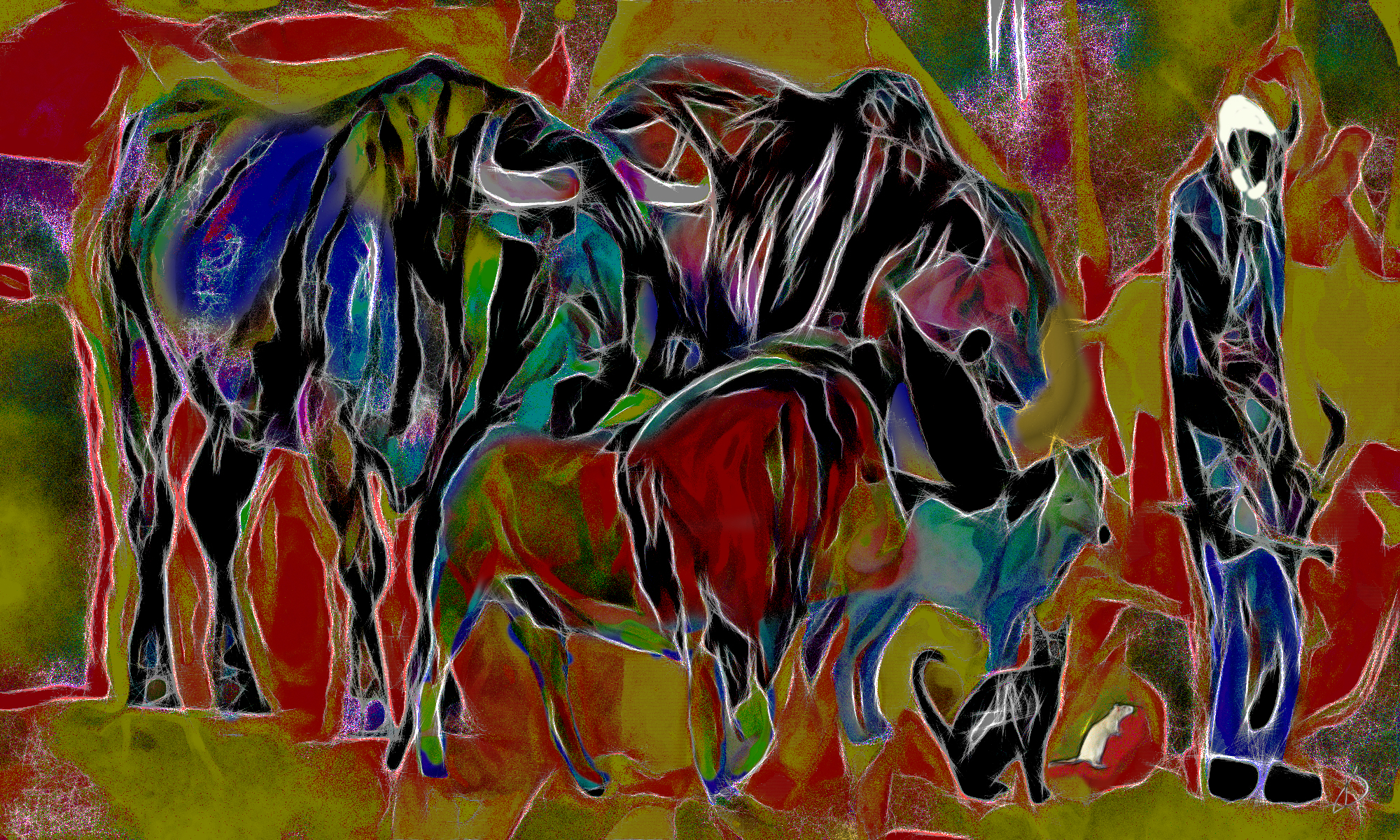
* Mathematical Texture: Look closely at his “Abstracts” section, and you will see patterns that suggest the use of algorithms—fractal-like repetitions or geometric distortions that would be nearly impossible to achieve by hand.
3. Thematic Range
His style isn’t limited to just one subject; it adapts across three main categories:
* Figurative & Portraits: These works (such as Moirai or Woman-in-Hat) often feel haunting or psychological. He uses digital “distortion” to strip away literal realism in favor of a more symbolic or atmospheric representation.
* Abstracts: These are his most technical works, focusing on “the language of the image” itself—color, form, and light—without the distraction of a recognizable subject.
* Conceptual “At the Edge”: The title of his gallery, Event Horizon, hints at a fascination with boundaries—where the physical world ends and the digital or mathematical world begins.
4. Technological Hybridity
A unique aspect of his style is the “finished” quality of his digital prints. He bridges the gap between a software engineer’s logic and a painter’s intuition. His work often avoids the “clean” or “clinical” look of vector art, instead embracing “glitch,” noise, and complex textures that make digital pixels feel organic.
In summary: If you enjoy art that feels modern and high-tech but still retains the soul and “messiness” of a traditional oil painting, Jansons’ style is a perfect example of that evolution.